
How Do Fayetteville, Springdale, Rogers Snakes Produce Venom?
Out of 2700 snake species, only 300 are venomous. However, many people are interested to know how Fayetteville, Springdale, Rogers snakes produce venom in their body. Note that venom is actually prepared by using few specific organs that are developed from salivary glands. Saliva of normal animals contain enzymes that assist in food digestion whereas nature has added toxic enzymes to the body of snakes so that they can produce venom with these enzymes. Experts say that the toxins present in snake venom are simply variations of several ordinary proteins. Studies show that preys have much evolved with each passing year and today they have developed immunity to respond even up to 50 to 100 types of these proteins that are present in venom and works for altering blood pressure or paralyzing nerves inside.
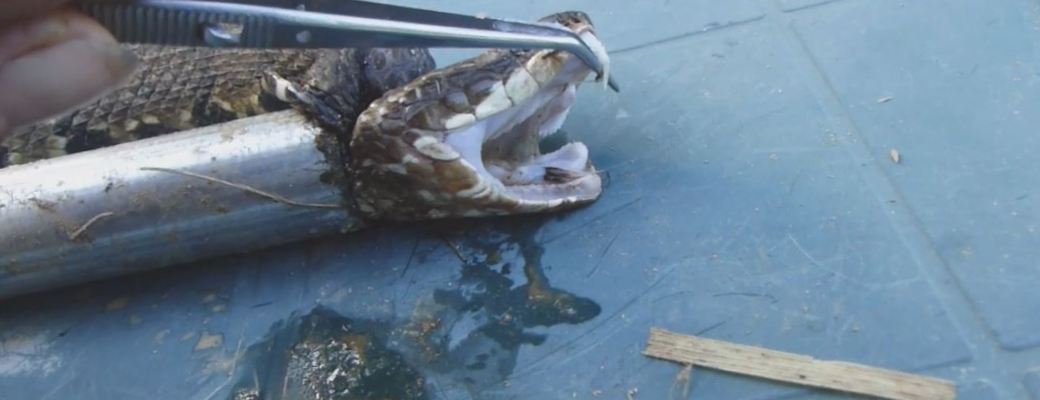
Note that normal people use to spit, and the venom is not present in their body. This venom is present only in very few animals on this planet, and the list includes bees, snails, centipedes, spiders, scrapings, vipers and jellyfish. Some animals have much stronger venom in their body that it can kill the victim instantly. Depending upon the type of venom injected into victim’s body, it can cause nerve paralysis, muscle rotting and can also interfere normal blood clotting process.
Generally, venom in most Arkansas snakes is developed with single gene only, but there are few snake species that make use of a mixture of genes to develop venom. There are special arrangements in their body to produce venom that is missing in other non-venomous creatures. Note that venom is developed inside special glands in snake’s body and it is later transported to the victim’s body via snake fangs. However, the venom genes are almost same as that of other genes present in the body that do different tasks. These genes are present in a similar manner inside venomous and nonvenomous snakes. Few proteins present in immune system help to provide protection against bacterial infections whereas many others work actively for the digestive system.
The process by which enzymes get transformed into venom is called mutation that causes duplication of DNAs. This duplication further cause production of twice proteins that work like harmful substance for other species. This venom is contained by specialized glands, and it is delivered to the body of the victim via infliction. Enough amount of venom can be transferred at once even if the bite is quite small. Experts reveal that venom contains several molecules that get disrupted into the physiological and biochemical process leading to defensive properties. With the help of fangs, Fayetteville, Springdale, Rogers snakes can easily transfer this venom into the body of their prey or other victims. Note that these fangs are sharp enough with grooved teeth. They have a hollow structure that further connected to the head of the snake. This connection assists in the transportation of venom from glands to the bite. In case if fangs of snake get lost, they have the ability to develop a new one within very less time. Venom production is a continuous process in their body and snakes keep on using for a lifetime.
Visit our Fayetteville, Springdale, Rogers wildlife trapping home page to learn more about us.
© 2018 Fayetteville, Springdale, Rogers Wildlife - Wild Animal Removal Services
